


Driving without risks
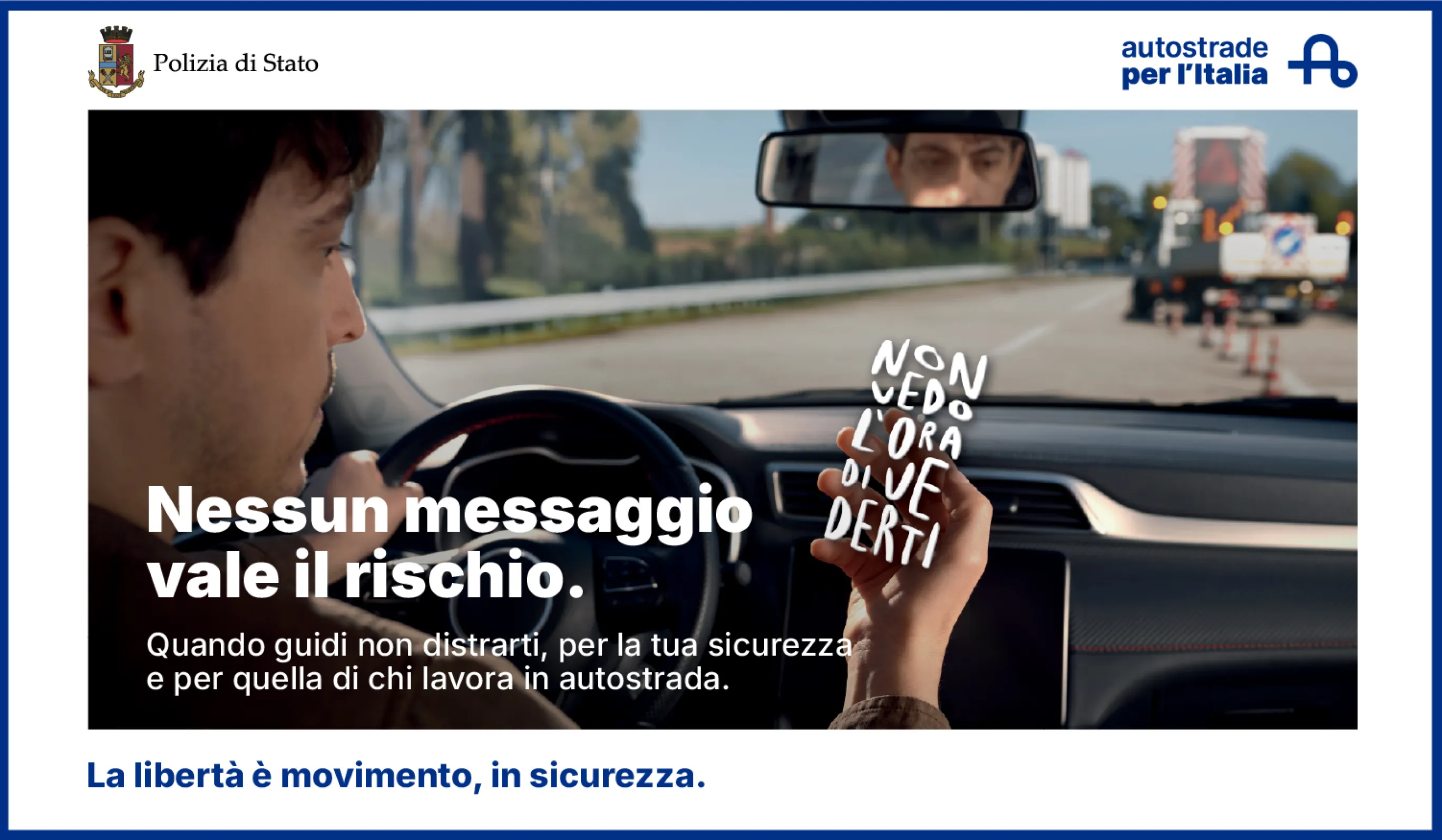
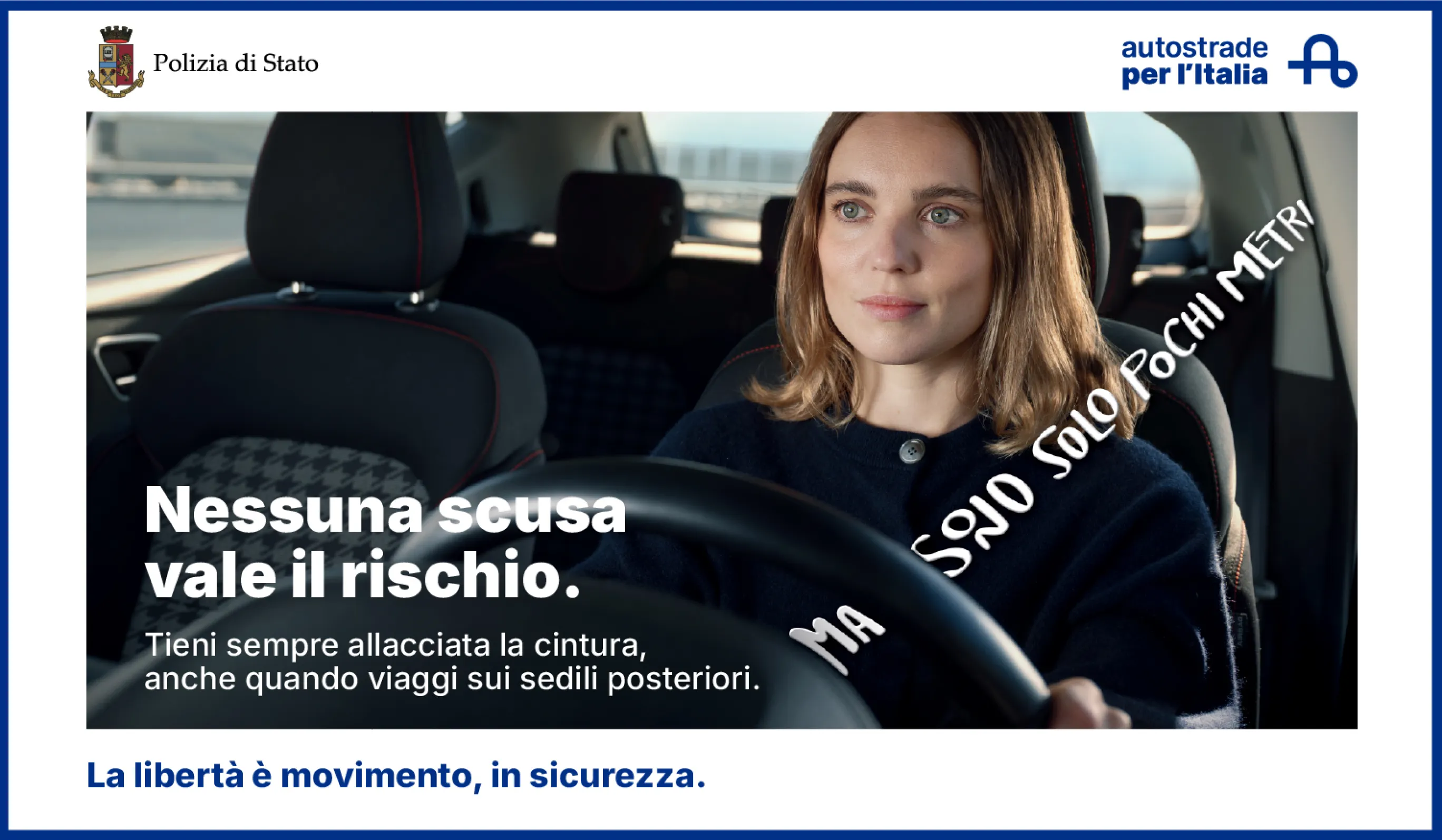
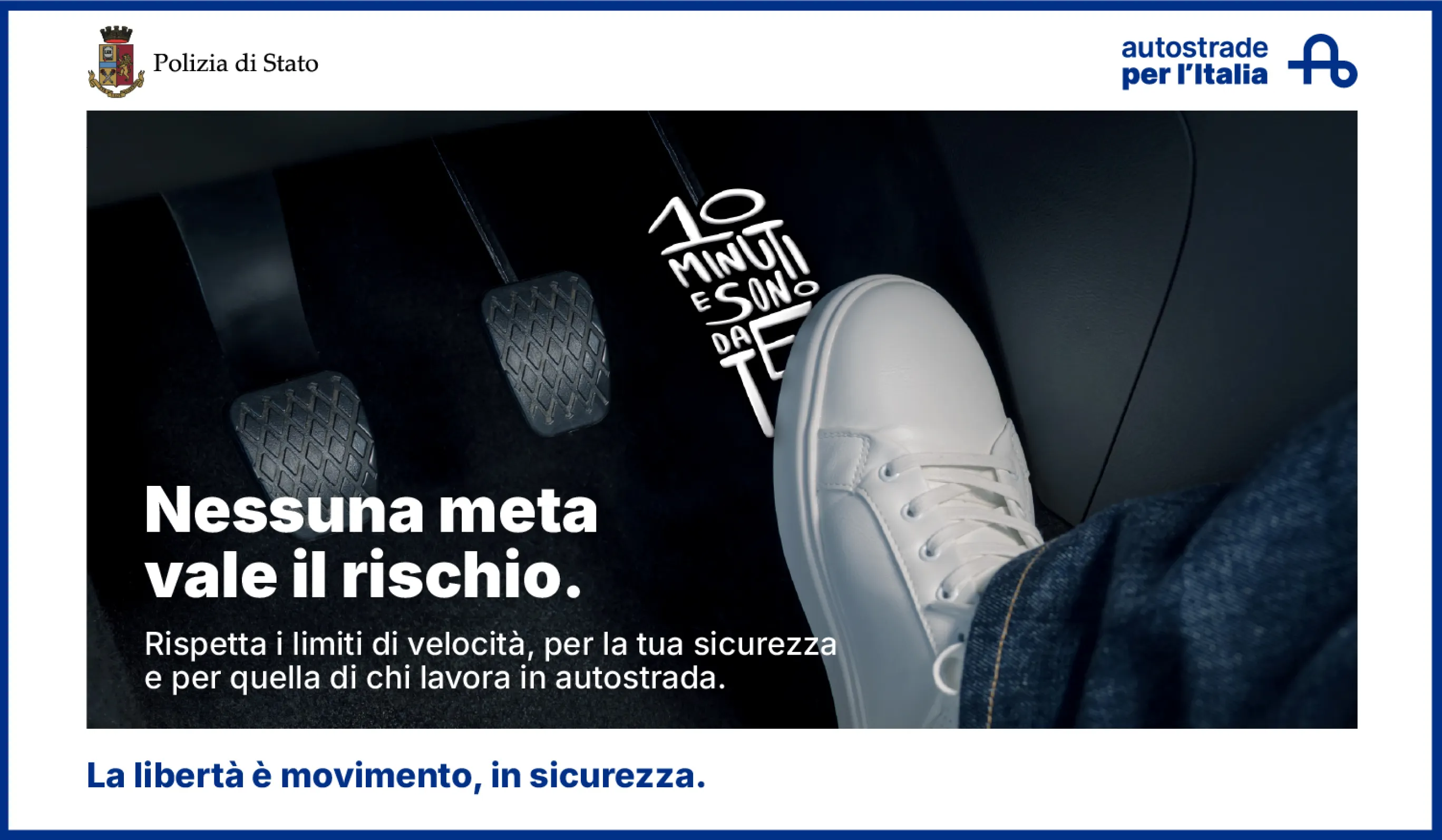
“Driving without risks” is our new communication campaign dedicated to road safety and a correct driving behaviour. It was developed in cooperation with the State Police and will accompany motorists in the press, online, in service areas and on the radio throughout the Christmas period.
In the three subjects, each driving misbehaviour - Not wearing a seatbelt, using a smartphone, exceeding the speed limit - is accompanied by the concrete risk involved, making it clear how a seemingly minimal choice can affect the safety of users and workers along the network.
The campaign will be broadcast on the radio using the voice of Ambra Sabatini, Paralympic champion and testimonial of Autostrade per l'Italia since 2022.
Listen to the radio commercials



Rules for road safety









“Non chiudere gli occhi”
“Non chiudere gli occhi” è il progetto sulla sicurezza stradale di Autostrade per l’Italia che coinvolge le scuole secondarie di secondo grado in tutta Italia. L’iniziativa prevede un percorso formativo in aula con quiz e test personalizzati, schede didattiche per i docenti e contenuti video sui comportamenti di guida corretti. Comprende inoltre incontri live con esperti della sicurezza stradale e testimonial.
Osservatorio “Non chiudere gli occhi"
L’Osservatorio annuale realizzato da Autostrade per l’Italia insieme a Skuola.net, nasce nel 2023 nell'ambito dell'omonimo progetto di sensibilizzazione sulla sicurezza stradale nelle scuole secondarie di secondo grado. L’obiettivo è quello di fotografare e misurare, di anno in anno, il grado di educazione stradale fra i più giovani e il livello di consapevolezza sui rischi al volante, attraverso 2.000 interviste a ragazzi e ragazze di età compresa tra i 16 e i 24 anni.